Eule organ Mercator-Hall Duisburg (Germany)
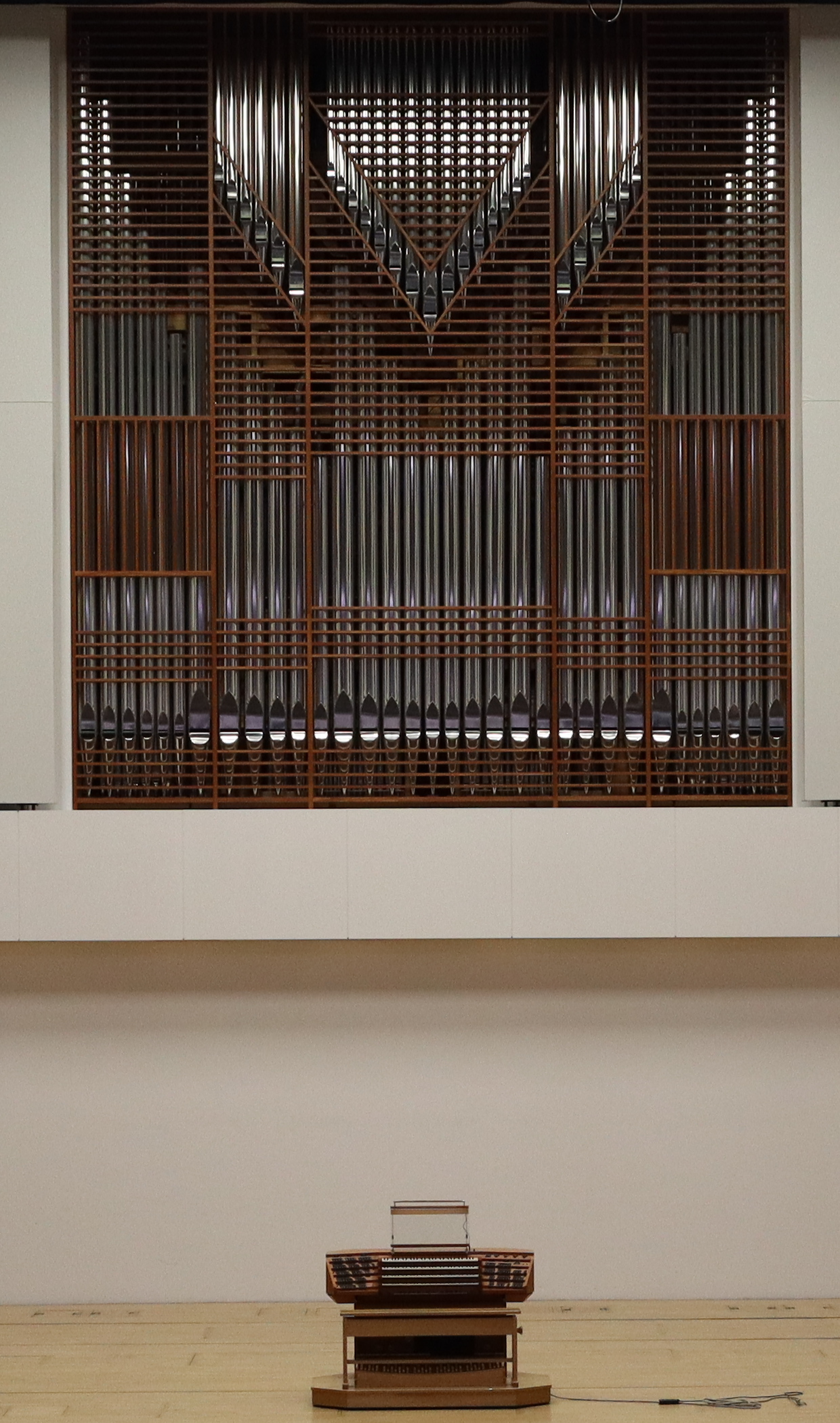
The Symphonic Concert Organ at the Mercatorhalle Duisburg
The organ is often associated with sacred spaces, yet its history extends far beyond the church. As early as antiquity, it resounded in Roman arenas and royal courts. In the 19th century, the organ flourished as a concert instrument in England. Virtuosos like William Thomas Best gave popular afternoon recitals in civic halls, which—thanks to affordable ticket prices—reached a wide audience. This tradition lives on today in the “Promenade Concerts” at the Royal Albert Hall.
The concert organ in the Philharmonie Mercatorhalle Duisburg stands firmly in this English symphonic tradition. Its tonal and visual models include the organs of Caird Hall in Dundee (1923, Harrison & Harrison) and Usher Hall in Edinburgh (1913, Norman & Beard). The instrument was meticulously voiced to match the unique acoustics of the Mercatorhalle. Unlike church organs, English-style concert organs are characterized by multidimensional sound projection that blends seamlessly with choir and orchestra.
One of the organ’s key technical features is its use of differentiated wind pressures within a single division. This requires numerous windchests and bellows, making an electric action essential. In Duisburg, five blowers, four independent wind systems, 20 bellows, and 35 windchests provide wind pressures ranging from 102 mm to 381 mm water column—up to five times higher than those found in standard organs.
The 4,349 pipes were constructed according to English models. Tuning collars made of spotted metal enable gentle voicing, while wooden stoppers in covered metal pipes reflect German influences. English organbuilding offers a wide array of voicing aids, including tuning ears, expression enclosures, refined treatment of the windway, and leathered upper lips. In reed pipes, the shape of the shallots, tongues, and resonators plays a defining role in the tonal character.
With four manuals and 72 typically English stops, the Eule organ produces a rich, immersive sound. It is suited for music ranging from the Baroque era to late Romanticism and even contemporary genres—making it one of the most versatile instruments in Europe and a destination for organists from around the world.
Mercator Hall
The Mercator Hall in Duisburg, located in the modern CityPalais in the heart of the city, is a central venue for music, culture, and conferences. Since its opening in April 2007, it has served as the home of the Duisburg Philharmonic Orchestra and has established itself as a premier location for concerts, galas, and business events. After a temporary closure between 2012 and 2016 due to fire safety issues, the hall underwent extensive renovations and was technically upgraded.
The centerpiece of the venue is the main concert hall, which seats up to 1,745 guests. It was acoustically designed to adapt flexibly to various event formats—from symphonic concerts and chamber music to jazz, pop, and conferences. Movable acoustic reflectors, adjustable curtains, and a finely tuned reflection system allow for variable acoustics at an international level. The stage is modular and expandable, and the hall features modern lighting and audio systems as well as an inductive hearing loop for visitors with hearing impairments. Wheelchair access and designated seating areas ensure barrier-free attendance.
In addition to the main hall, the Mercatorhalle includes the smaller Rudolf Schock Hall with around 529 seats, an exclusive lounge for VIP guests, and a flexible conference area. The venue offers a total of over 12,000 square meters of event space, along with a parking garage with 670 spaces.
Blending functional design, technical excellence, and cultural significance, the Mercatorhalle has become a major hub in the Ruhr region—a place where sound, architecture, and urban life come together in harmony.